Physical Address
304 North Cardinal St.
Dorchester Center, MA 02124
Physical Address
304 North Cardinal St.
Dorchester Center, MA 02124
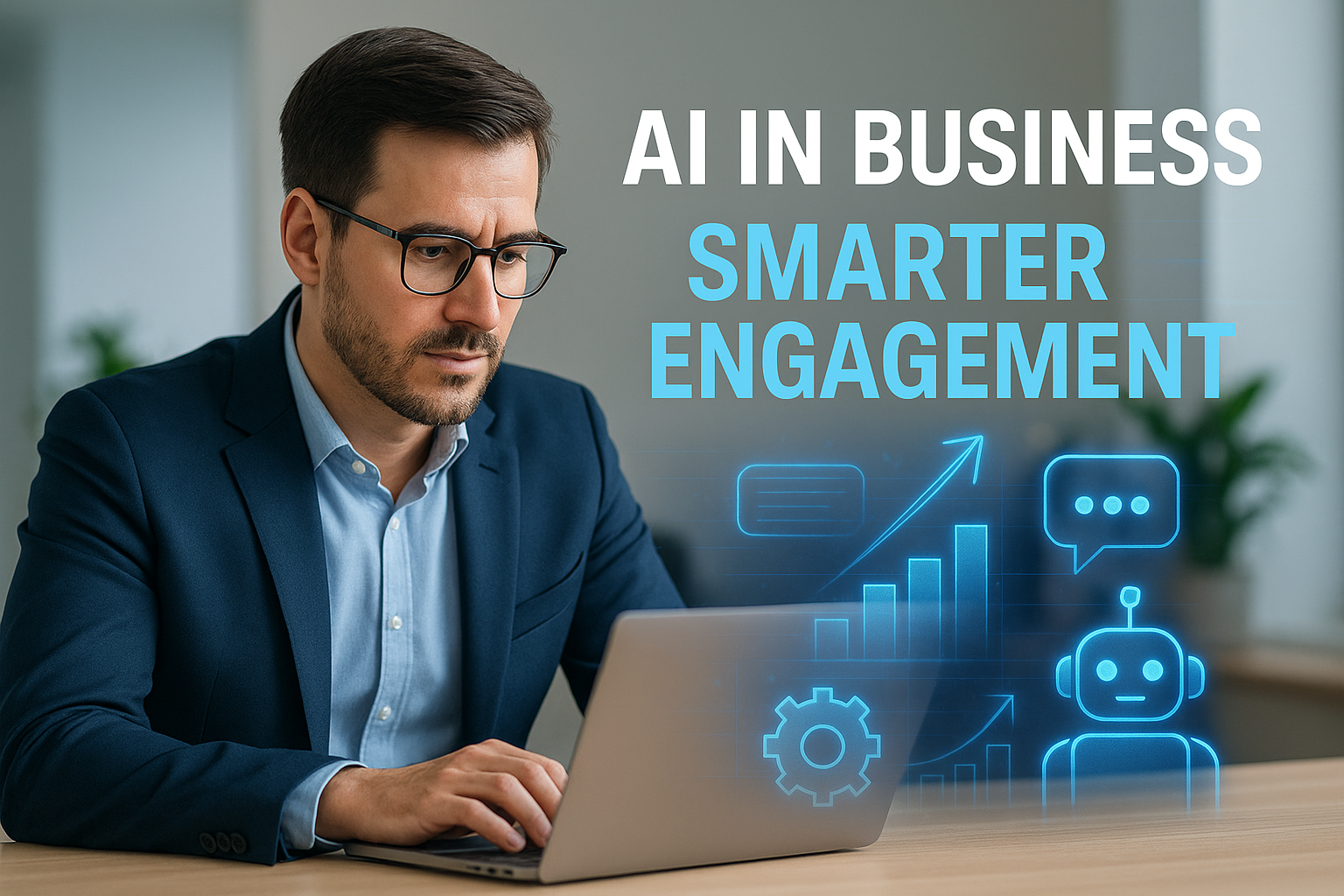
How to Use AI in Your Business is a question every modern entrepreneur should ask. Today’s customers expect fast, personalized, and meaningful interactions at every touchpoint. By adopting AI-driven tools, companies can strengthen relationships, improve communication, and ensure customers feel valued. From chatbots to predictive analytics, the possibilities are wide-reaching.
Customers interact with businesses across multiple platforms, emails, social media, websites, and apps. Handling each interaction manually is not only time-consuming but also inconsistent. AI enables real-time responses, predictive insights, and tailored communication, which leads to better customer loyalty. Leveraging AI for engagement ensures businesses can adapt quickly to changing demands.
Applying AI effectively requires planning and focus. Here are some areas where businesses can start:
AI-powered chatbots can respond instantly to customer questions, offer product information, and resolve simple issues. This improves response speed while freeing staff for complex tasks.
AI systems analyze browsing and purchase history to suggest products or services that suit each customer’s preferences. This builds stronger relationships and increases sales.
AI tools can detect emotions in customer messages, reviews, and social posts. By understanding sentiment, businesses can address dissatisfaction faster and improve experiences.
AI forecasts customer needs based on historical data. This helps businesses anticipate demand, plan better promotions, and strengthen engagement strategies.
Beyond chatbots, AI-driven ticketing systems route queries to the right team, ensuring customers don’t feel lost in the process.
AI monitors brand mentions and customer discussions on social media. Insights from these conversations help businesses stay responsive.
AI can tailor subject lines, content, and timing based on customer behavior, resulting in higher open rates and engagement.
Integrating AI with voice-enabled devices allows customers to interact with businesses more naturally, offering convenience and accessibility.
AI reviews customer surveys and feedback quickly, highlighting areas where improvements are needed.
AI analyzes demand and competition to adjust prices in real-time, ensuring competitive offers without compromising profitability.
The best practices include starting with simple tools, focusing on customer pain points, and training your staff to manage AI systems effectively. Businesses should measure outcomes regularly to ensure engagement is improving. Balance automation with a personal touch to keep communication authentic.
AI tools provide faster responses through chatbots, deliver personalized messages, and analyze data to offer relevant solutions. This reduces waiting times and ensures customers receive consistent experiences. With AI, companies can be available around the clock.
Not necessarily. Many affordable AI tools exist for tasks like scheduling, email personalization, and feedback analysis. Small businesses can start with budget-friendly solutions and scale as their needs grow. This makes AI accessible at every level.
AI cannot fully replace humans, especially in complex or emotional scenarios. While AI handles repetitive tasks, humans bring empathy and problem-solving skills. The most effective strategy is blending AI efficiency with human understanding.
Data is essential for AI to deliver accurate results. Clean, reliable, and organized data allows AI systems to personalize messages and predict customer needs. Poor data quality, on the other hand, leads to ineffective outcomes and customer frustration.
Businesses today cannot afford to ignore AI when it comes to customer engagement. Using tools like chatbots, predictive analytics, and personalized recommendations, companies can build trust and loyalty. By following the 10 pro tips, keeping data clean, and balancing automation with a human touch, engagement becomes smarter and more impactful. With the right approach, How to Use AI in Your Business is no longer a challenge but a path to lasting success.