Physical Address
304 North Cardinal St.
Dorchester Center, MA 02124
Physical Address
304 North Cardinal St.
Dorchester Center, MA 02124
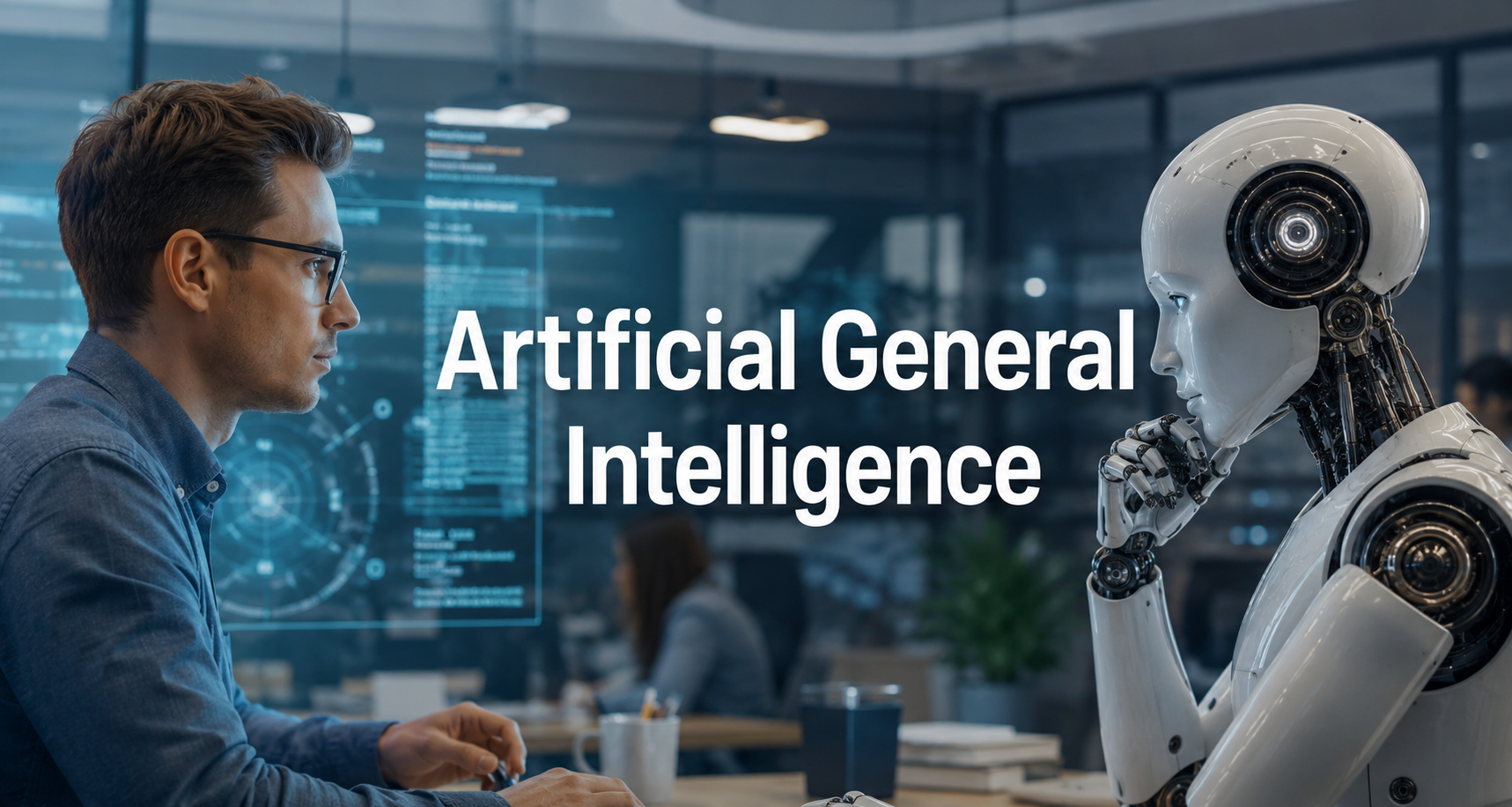
Artificial General Intelligence represents one of the most exciting and discussed concepts in the technology world today. Unlike current AI systems that are designed for specific tasks, AGI aims to perform a wide range of intellectual activities with abilities similar to human thinking and learning. Researchers, businesses, and technology professionals are closely watching its development because it could significantly change how people interact with machines.
The idea behind AGI is to create systems that can understand, learn, reason, and apply knowledge across different situations without requiring specialised programming for every task. While today’s AI tools can analyse data, generate content, and automate processes, they remain limited to specific functions. AGI seeks to overcome these limitations by bringing broader intelligence and adaptability.
As technology continues to evolve, professionals working in automation and digital transformation are exploring how advanced AI capabilities could improve business efficiency and innovation. Insights shared through Rahul Jadhav demonstrate how organisations are already benefiting from intelligent automation while preparing for future technological advancements.
The concept of AGI refers to a machine that can understand and perform intellectual tasks in a manner similar to humans. Instead of being trained for only one purpose, an AGI system would be capable of learning new skills, adapting to unfamiliar situations, and applying knowledge across multiple domains.
Current AI technologies excel at specialised tasks such as image recognition, language processing, and data analysis. However, they cannot easily transfer their knowledge from one task to another. AGI aims to bridge this gap by creating systems with more flexible and generalised learning capabilities.
Many experts believe AGI could transform industries by improving decision-making, increasing productivity, and supporting innovation. At the same time, it raises important discussions about ethics, safety, and responsible development. Understanding its potential and limitations is essential for businesses and individuals preparing for the future.
When discussing AGI explained, it is important to understand the difference between narrow AI and general intelligence. Narrow AI is designed to solve specific problems, while AGI would be capable of learning and adapting across many different activities.
For example, a narrow AI system trained to analyse customer data cannot suddenly perform medical research without extensive retraining. An AGI system, however, would be able to learn new subjects and apply knowledge in ways similar to human learning.
This flexibility is what makes AGI such an important goal in technology development. It has the potential to create systems that can assist people in a much wider range of activities while continuously improving through experience.
Modern AI technologies are powerful, but they remain specialised tools. They perform exceptionally well within defined boundaries but struggle when faced with unfamiliar situations. AGI aims to move beyond these limitations by creating systems capable of broader understanding and reasoning.
One of the key differences is adaptability. Current AI models rely heavily on training data and predefined objectives. AGI would be able to learn independently, apply knowledge across different areas, and solve new problems without extensive retraining.
Businesses focused on innovation and automation understand the importance of preparing for future developments. The technology strategies highlighted on Rahul Jadhav emphasise the value of combining intelligent systems with practical business solutions to achieve sustainable growth and operational efficiency.
In discussions about AGI explained, one of the most exciting aspects is its potential impact on society and business. AGI could help solve complex challenges by processing information, identifying patterns, and generating solutions across multiple fields.
Healthcare organisations could benefit from faster research and diagnosis support. Educational institutions could create more personalised learning experiences. Businesses could improve decision-making and automate complex workflows more effectively.
The ability to learn and adapt continuously could make AGI a valuable tool for innovation. However, realising these benefits will require careful planning, responsible development, and strong human oversight.
While AGI offers exciting possibilities, it also presents significant challenges. One major concern involves ensuring that advanced systems operate safely and align with human values. Developers must establish safeguards to prevent unintended outcomes and maintain accountability.
Another challenge is the potential impact on jobs and workforce structures. As technology becomes more capable, organisations may need to focus on reskilling employees and creating new opportunities that emphasise uniquely human strengths.
Privacy, transparency, and ethical decision-making will also remain important considerations. Businesses adopting advanced technologies should prioritise responsible implementation and maintain clear communication with stakeholders. Balancing innovation with accountability will be essential as AI capabilities continue to evolve.
The topic of AGI explained is becoming increasingly relevant for organisations planning long-term technology strategies. Businesses want to understand how advanced intelligence systems could influence operations, customer experiences, and market competition.
Organisations that stay informed about emerging technologies can better prepare for future opportunities and challenges. Investing in automation, digital transformation, and continuous learning creates a stronger foundation for adapting to technological change.
Many of the principles discussed by experts through Rahul Jadhav focus on using technology strategically to improve efficiency while maintaining a strong human-centered approach to growth and innovation.
Before exploring AGI, build a strong understanding of current AI technologies. Knowing how existing systems work makes it easier to understand future developments.
Technology evolves rapidly, so staying informed is essential. Regular learning helps individuals and businesses adapt more effectively.
Follow developments in automation, machine learning, and intelligent systems. Understanding trends provides valuable insights into future opportunities.
Human judgment remains important even as technology advances. Strong critical thinking supports better decision-making and problem-solving.
Businesses and professionals should strengthen their technical knowledge. Digital literacy improves adaptability and long-term competitiveness.
Consider how advanced systems impact privacy, fairness, and accountability. Responsible implementation helps build trust and sustainability.
Use automation to support productivity while preserving human expertise. The best results often come from collaboration between people and technology.
Creativity, communication, and leadership remain valuable abilities. These skills complement technological advancements and support career growth.
Taking time to explore AGI explained resources helps build awareness of future possibilities and prepares organisations for emerging innovations.
Technology transformation takes time. Businesses that plan ahead are often better positioned to adapt and succeed.
The future of intelligent systems will likely involve greater collaboration between humans and technology. Rather than replacing people entirely, advanced systems may help individuals perform tasks more efficiently and make better-informed decisions.
Organisations that embrace innovation while maintaining ethical standards can benefit from technological progress. Success will depend on balancing automation with human creativity, judgment, and leadership.
Resources available through Rahul Jadhav highlight how businesses can leverage modern technologies today while building a foundation for future advancements. Preparing now can help organisations remain competitive as intelligent systems continue to evolve.
Artificial General Intelligence refers to a form of AI capable of learning and performing a wide variety of intellectual tasks similar to humans. Unlike narrow AI, it is not limited to a single function. It can adapt to new situations and apply knowledge across different domains. The goal is to create more flexible and capable intelligent systems.
Current AI systems are designed for specific tasks and operate within defined limits. AGI aims to learn and adapt across multiple areas without extensive retraining. This broader capability makes it fundamentally different from narrow AI. It focuses on general problem-solving and learning.
Industries such as healthcare, education, finance, manufacturing, and customer service could benefit significantly. AGI could improve efficiency, support decision-making, and help solve complex problems. Organisations may also discover new opportunities for innovation. The impact could be widespread across many sectors.
No, AGI has not yet been achieved. Current AI technologies are powerful but remain specialised for specific tasks. Researchers continue working toward more advanced systems. The timeline for achieving AGI remains uncertain.
AGI has the potential to transform how people work, learn, and solve problems. It could improve productivity and support innovation across industries. At the same time, responsible development will be essential. Understanding its possibilities helps organisations prepare for future changes.
Artificial General Intelligence represents a significant step toward creating systems capable of learning, reasoning, and adapting in ways similar to humans. Understanding the concept through discussions of AGI explained helps individuals and organisations recognise both the opportunities and challenges ahead. While AGI remains a future goal, its potential impact on business, education, healthcare, and innovation is substantial. By staying informed, investing in digital skills, and embracing responsible technology adoption, organisations can prepare for a future where Artificial General Intelligence plays an increasingly important role in shaping human progress.